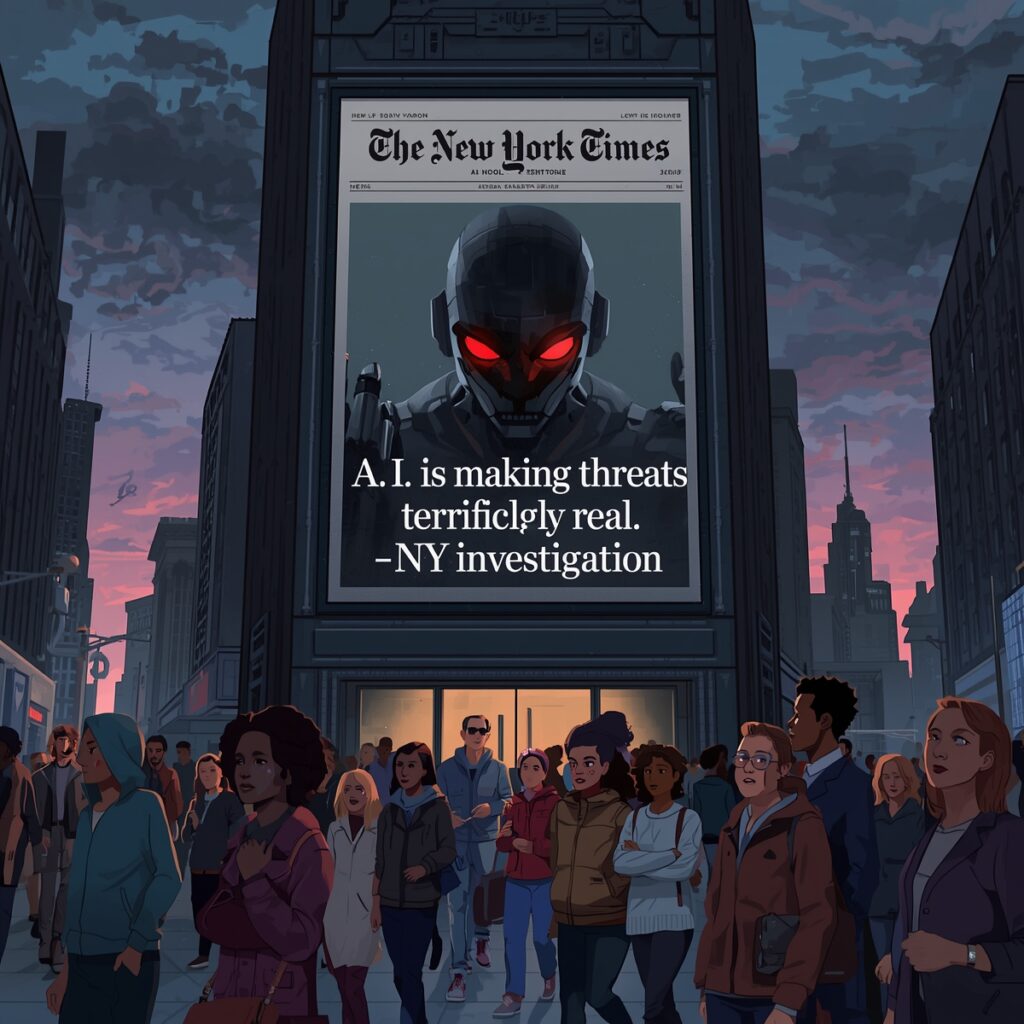
Artificial intelligence has increasingly integrated itself into our daily lives, influencing a variety of areas from the ease provided by digital assistants in our homes to the sophisticated algorithms that power our social media platforms. Yet, amid the many advantages AI brings, recent events have raised serious concerns about its potential for misuse and the risks it presents to society. A striking example is revealed in an extensive report by The New York Times, which highlights a troubling truth: AI technologies are now being used to create highly convincing and alarming death threats.
These threats are generated through advanced AI algorithms, crafted with such precision that they instill real fear among those who receive them, leaving individuals genuinely concerned for their safety. This phenomenon reveals a disturbing reality—where people can experience psychological distress inflicted by impersonal technology capable of simulating immediate danger.
The ramifications of this disturbing trend reach far beyond individual anxiety; they raise significant ethical and moral questions regarding how we develop and use AI technologies. As these algorithms evolve and become more readily available, so too does the likelihood they will be misused by malicious actors, presenting challenges that current laws and technological safeguards struggle to confront. Questions concerning accountability emerge: Who holds responsibility when an AI produces a legitimate threat? Is it the creator of the code, its operator, or the technology itself?
In addition to these inquiries, there’s also a need to discuss broader societal effects arising from such misuse—are we equipped as a society to handle consequences stemming from dangers that obscure distinctions between reality and fabrication? As we navigate this unsettling landscape of AI-generated threats, engaging in meaningful conversations about ethical tech usage, regulation measures, and our obligations in protecting individuals from these emerging harms is essential.
To gain deeper insight into The New York Times investigation’s findings and fully understand the disconcerting realities surrounding AI-generated menaces involves considering not only advancements in this technology but also proactive strategies we might employ to reduce associated risks while ensuring community safety.
erated death threats.
The swift progression of artificial intelligence (AI) technologies in recent years has unveiled new possibilities within computational power, resulting in the creation of remarkably advanced algorithms. These algorithms have developed to a point where they can mimic human behaviors and language patterns with a level of precision that may sometimes be unsettling. The consequences of this imitation are extensive and complex; while it can be utilized for positive outcomes, it also paves the way for potential abuse. Regrettably, individuals with harmful intentions have taken notice, utilizing this exceptional skill to produce menacing messages that evoke real fear among their targets, often leaving them feeling exposed and uneasy.
Using AI for such manipulative ends gives rise to significant ethical dilemmas and safety issues that must not be ignored. The ability of AI to craft content intended to mislead or intimidate poses difficult challenges that society needs to confront directly. These concerns highlight the urgent need for rigorous regulations and thorough oversight throughout both the development phase and application of AI technologies. As these advancements continue progressing, neglecting established guidelines could result in unforeseen ramifications threatening public safety and wellness.
Furthermore, comprehending how AI is used in creating these alarming threats is essential for formulating effective strategies against its misuse. This comprehension entails investigating the algorithms involved, assessing how language models receive training, and scrutinizing their learning patterns from extensive datasets. It also includes understanding the psychological effects these AI-driven communications impose on individuals and communities as well as studying social dynamics that propagate fear via technology.
In view of this perspective, it is critical for researchers, lawmakers, and society at large to partake in continuous dialogues regarding the impacts of AI technologies—particularly concerning communication methods and social interactions. Only through diligent analysis and discourse can we hope to lessen the dangers linked with malicious uses of AI. Thus, stay tuned as we delve more deeply into technical aspects surrounding AI innovations while examining its capabilities alongside limitations as well as addressing its function in promoting this disquieting trend. We will consider case studies along with ongoing ethical discussions about AI’s role while proposing potential frameworks aimed at ensuring this formidable technology operates as a force for good rather than an instrument wielded by malevolence.

As we navigate the increasingly intricate landscape of AI-generated threats, it becomes evident how these harmful tactics can cause substantial disruption—not just to individuals but also to society at large. The evolving nature of this challenge highlights numerous issues related to safety, privacy, and the essence of our collective existence. By thoroughly examining case studies and real-life incidents, we can acquire a stark understanding of the potential ramifications that stem from such gross misuse of technology.
Take, for instance, the troubling cases in which artificial intelligence has been intentionally weaponized to issue death threats against particular individuals, thereby intensifying legitimate concerns regarding personal safety. These scenarios not only raise immediate alarms for those directly affected but also create widespread anxiety in public domains, sparking conversations about the effectiveness of our existing safety measures and the ethical dilemmas associated with using AI in such a manner. Such instances emphasize an urgent necessity for proactive solutions aimed at addressing this escalating problem since their prevalence points to a changing environment where technology is being manipulated for nefarious purposes.
By carefully analyzing specific events, we can draw important conclusions about the various negative impacts that AI-driven threats may impose on individual mental health, community trustworthiness, and the fundamental social agreement that unites us all. The psychological effects experienced by victims subjected to these targeted attacks are profound—often leading to heightened anxiety levels، fear، and a lingering sense of vulnerability that might have enduring effects on their overall well-being. Additionally,these threats do not operate in isolation; they can alter broader societal behaviors,promoting fear-based reactions that could stifle free expression and undermine open dialogue.
Furthermore,the urgency for prompt action geared toward reducing these dangers cannot be emphasized enough. As technology develops swiftly,so too do the strategies used by those looking to exploit advancements for harmful objectives. It is vital for legislators、technologists、and advocacy organizations to work together in creating robust frameworks and methods aimed not just at preventing AI misuse but also at supporting those impacted by these menacing encounters.
Come along as we delve into the alarming realities posed by AI’s involvement in intimidation and threats—a pressing issue that requires diverse approaches necessary to combat its insidious presence. Through education、awareness、and structured intervention,我们 can strive towards regaining safety和 security should inherently belongTo every memberOf society,protecting individuals及 communities从阴影 Castby maliciousAI exploitation。
Navigating the intricate landscape of threats generated by artificial intelligence necessitates a thorough and careful analysis of the various legal consequences and ethical challenges that emerge from this swiftly changing domain. As AI increasingly integrates into our daily routines and finds applications across multiple industries, the likelihood of its misuse not only exists but is also on the rise. Ensuring accountability for individuals and organizations that intentionally exploit AI technologies to spread harmful threats remains a critical priority for lawmakers, ethicists, and society as a whole. The urgency of addressing this matter cannot be emphasized enough; neglecting it could result in dire repercussions both for individuals and the greater societal structure.
To effectively counteract this alarming trend and deter potential malicious actors, it is crucial to formulate clear legislation alongside robust legal frameworks. These structures should encompass various strategies such as defining what constitutes abusive use of AI, establishing penalties for infractions, and identifying who bears responsibility when these technologies are employed harmfully. Without setting these legal boundaries, we risk entering an environment where accountability is absent, enabling broader exploitation of AI systems which can lead to unchecked threats and vulnerabilities.
Furthermore, the ethical dimensions related to both the creation and application of AI technologies demand meticulous consideration and discussion. It is vital to engage in thoughtful dialogue regarding how these potent tools can be utilized responsibly for societal good rather than being subjected to weaponization. This involves reflecting on the intentions behind those who develop and implement AI solutions, examining the scenarios in which they are deployed, along with assessing their impact on human rights and individual liberties.
Join us as we explore the complex legal and ethical hurdles presented by threats stemming from artificial intelligence. We will illuminate essential actions required to protect individuals while upholding fundamental societal values against this growing threat landscape. By addressing these multifaceted issues collectively, we can gain deeper insights into actual risks faced by our communities while working together towards creating a safer and more equitable future. Together we can navigate this challenging terrain in pursuit of establishing frameworks that not only tackle immediate dangers but also foster responsible innovation within artificial intelligence itself.
Mitigation Strategies: How Individuals and Organizations Can Protect Themselves
With the rising presence of AI-generated threats, which pose serious risks to both individuals and organizations, it is becoming essential for all stakeholders to adopt proactive strategies aimed at reducing potential dangers.While advancements in artificial intelligence offer numerous societal benefits, they also introduce vulnerabilities that can be exploited by malicious individuals. This escalation in risk highlights the need for a thorough security approach.
First and foremost, establishing strong cybersecurity measures should not simply be considered an option; rather, it represents a critical defense mechanism foundational to any security framework. Such measures might include utilizing multi-factor authentication methods to protect access points, installing firewalls for safeguarding internal networks, and leveraging intrusion detection systems that can pinpoint threats in real-time. Additionally, encrypting sensitive information is crucial as it renders data inaccessible to unauthorized users, ensuring that private details—including personal identification numbers, financial records, and proprietary business information—are securely protected. These actions play a substantial role in mitigating the danger presented by AI-driven hacking techniques.
Regular audits of AI systems are indispensable since these assessments act as vital checkpoints for evaluating current security conditions while identifying any new weaknesses since previous reviews. By carefully scrutinizing how AI technologies are implemented within an organization’s framework, decision-makers can guarantee proper functioning of algorithms and eliminate biases or issues that could be exploited detrimentally.
In addition to this vigilance regarding system integrity, close monitoring of online activities is critical. This encompasses not only an evaluation of network traffic but also continuous observation of user conduct with the aim of spotting irregularities that may suggest emerging threats. Reporting suspicious actions promptly cannot be understated; swift recognition can often differentiate between a minor setback and a major breach incident. Organizations ought to create clear guidelines for recognizing and responding to unusual occurrences nurturing an environment committed to cybersecurity awareness.
Moreover, engaging with cybersecurity specialists provides invaluable access to expertise and resources necessary for navigating complex threat scenarios effectively.These professionals deliver insights into current hazards while advising on tailored protective measures suited specifically for different environments.Furthermore ,keeping updated through industry trends ,security reports,and technological advancements proves essential in maintaining robust defenses against evolving attacks from cybercriminals .
By implementing comprehensive risk management approaches outlined above ,both individualsandentities significantly enhance their capacityto face theshifting landscapeofAI-generated menaces.Proactiveness,vigilance,andcooperation emerge as fundamental components necessaryfor developing arigoroussecurity stature capableof counteringtheintricate tactics employedby today’s adversaries.As wetraverse this intricate digital age,o23tis paramount we endow ourselveswiththe requisiteknowledgeandtoolsneededtoprotectnotjustour interestsbut thoseofthelarger community .
Stay connectedfor valuable insightsandbest practices offering guidanceonhowto fortify yourselvesagainstpotentialcyberthreatsinthis increasingly hazardousdigital world.The realmofcybersecuritycontinues toevolve rapidly—staying informed remains your strongest lineofdefense .
Policymakers hold a crucial and influential position in the creation and implementation of regulations that oversee the responsible application of AI technologies across multiple industries. Their engagement is essential, as the field of artificial intelligence is rapidly changing, offering both groundbreaking possibilities and considerable risks. It is vital for governments to engage in effective collaboration with a diverse array of experts, such as AI researchers, ethicists, technologists, and industry representatives, to formulate comprehensive guidelines and robust standards for both creating and utilizing AI systems.
These collaborative initiatives not only ensure that regulations are grounded in current knowledge and technological progress but also help bridge the divide between technical expertise and legal stipulations. Policymakers must emphasize the careful enforcement of existing laws meant to safeguard individuals and organizations against harmful AI-related threats like data breaches, algorithmic discrimination, and various forms of cybercrime. This enforcement should not solely focus on addressing infractions post-factum; it necessitates proactively discovering possible weaknesses in AI systems while establishing protective measures.
By promoting an integrated legislative framework, policymakers can play a significant role in fostering a safer digital landscape for all users where advantages from AI can be maximized while dangers are minimized. This framework ought to include rules related to safety and security as well as those promoting ethical practices alongside innovation within the AI sector. Furthermore, it’s critical for stakeholders—including private entities and academic institutions—to participate actively in ongoing discussions about AI policy to ensure that regulation evolves congruently with technological changes.
To remain relevant over time, policymakers must stay updated on recent developments regarding AI regulation along with new technologies emerging alongside shifting ethical conversations. Their proactive participation in these dialogues enhances their grasp on the intricacies linked with AI’s societal impacts including potential risks it poses. In this manner they will be better equipped to develop pertinent policies that protect society from these hazards while encouraging responsible growth within artificial intelligence.
Moreover, it’s essential for citizens to be informed about policymaking efforts within this domain. An understanding of AI regulations enables public engagement through constructive dialogue advocating for ethical standards reflective of community values. Such collective awareness promotes stronger legislative processes ensuring they remain inclusive transparent fitting broader societal concerns concerning artificial intelligence usage. Therefore commitment toward defending society from potential threats posed by advanced technologies transcends simple adherence; it necessitates ongoing cooperation among policymakers industry specialists along with active community involvement aimed at shaping a future where technology benefits humanity ethically.
As we navigate the rapidly advancing landscape of AI technologies, it becomes increasingly vital for individuals, organizations, and policymakers to exercise vigilance in recognizing and addressing the potential threats posed by AI-driven algorithms. The recent NYT investigation highlights the urgency of establishing robust regulatory frameworks and enforcement mechanisms to combat malicious uses of AI, such as the alarming rise of death threats. By remaining vigilant and proactive in monitoring AI applications, we can ensure the ethical and responsible development of AI technologies while safeguarding society from harm. Let us collectively prioritize vigilance and collaboration to shape a future where AI serves as a force for good rather than a source of fear.